
Gravel Driveway vs Pavers: Which Wins in Florida?
Explore the pros and cons of gravel driveways vs pavers in Florida. Make an informed choice for your home’s driveway today!
Overview of Driveway Options in Florida
Homeowners in Florida face a choice between gravel driveways and paver driveways, each presenting unique advantages and challenges. With the state's sandy soils, heavy rainfall, and humidity, it's essential to thoroughly evaluate these options. This article compares both driveway types to help you make an informed decision.
Pros and Cons of Gravel Driveways
Gravel driveways are known for their practicality, but they come with trade-offs that Florida homeowners should consider.
Durability and Washout Issues
Pros:
- Cost-Effective: Gravel driveways typically have lower installation costs than paver options.
- Drainage: They provide effective drainage, minimizing water pooling during heavy rains.
Cons:
- Washout Risk: Florida’s heavy rain can wash away gravel, resulting in uneven surfaces and frequent replenishment needs.
- Maintenance: Ongoing maintenance is necessary to prevent ruts and erosion, requiring frequent re-leveling of the surface.
Maintenance Requirements
Maintaining a gravel driveway is crucial for its longevity:
- Regular gravel replenishment to fill in washouts and ensure an even surface.
- Raking to redistribute gravel and address any low spots that develop.
Pros and Cons of Paver Driveways
Paver driveways bring distinct benefits that appeal to many homeowners:
Aesthetic Considerations
Pros:
- Variety of Designs: Pavers come in multiple styles, colors, and shapes, allowing for a high degree of customization.
- Visual Appeal: This type of driveway can significantly enhance your home's curb appeal.
Cons:
- Higher Initial Cost: The installation costs of pavers are generally more than those of gravel.
- Installation Complexity: Proper installation is crucial to avoid shifting or sinking, particularly in sandy soils.
Cost Factors
While the initial investment in pavers is more substantial, they can offer long-term value:
- Longevity: Paver driveways can last two to three decades with less maintenance than gravel, often proving more economical over time.
- Reduced Maintenance: They require only periodic cleaning and sealing, making them easier to maintain.
Cost Comparison between Gravel and Paver Driveways
When evaluating costs, consider both installation and maintenance:
| Aspect | Gravel Driveway | Paver Driveway |
|---------------------------|----------------------------|----------------------------|
| Initial Installation | $1 to $3 per square foot | $10 to $30 per square foot |
| Long-term Maintenance | Ongoing replenishment needed| Minimal upkeep required |
| Lifespan | 5-10 years | 20-30 years |
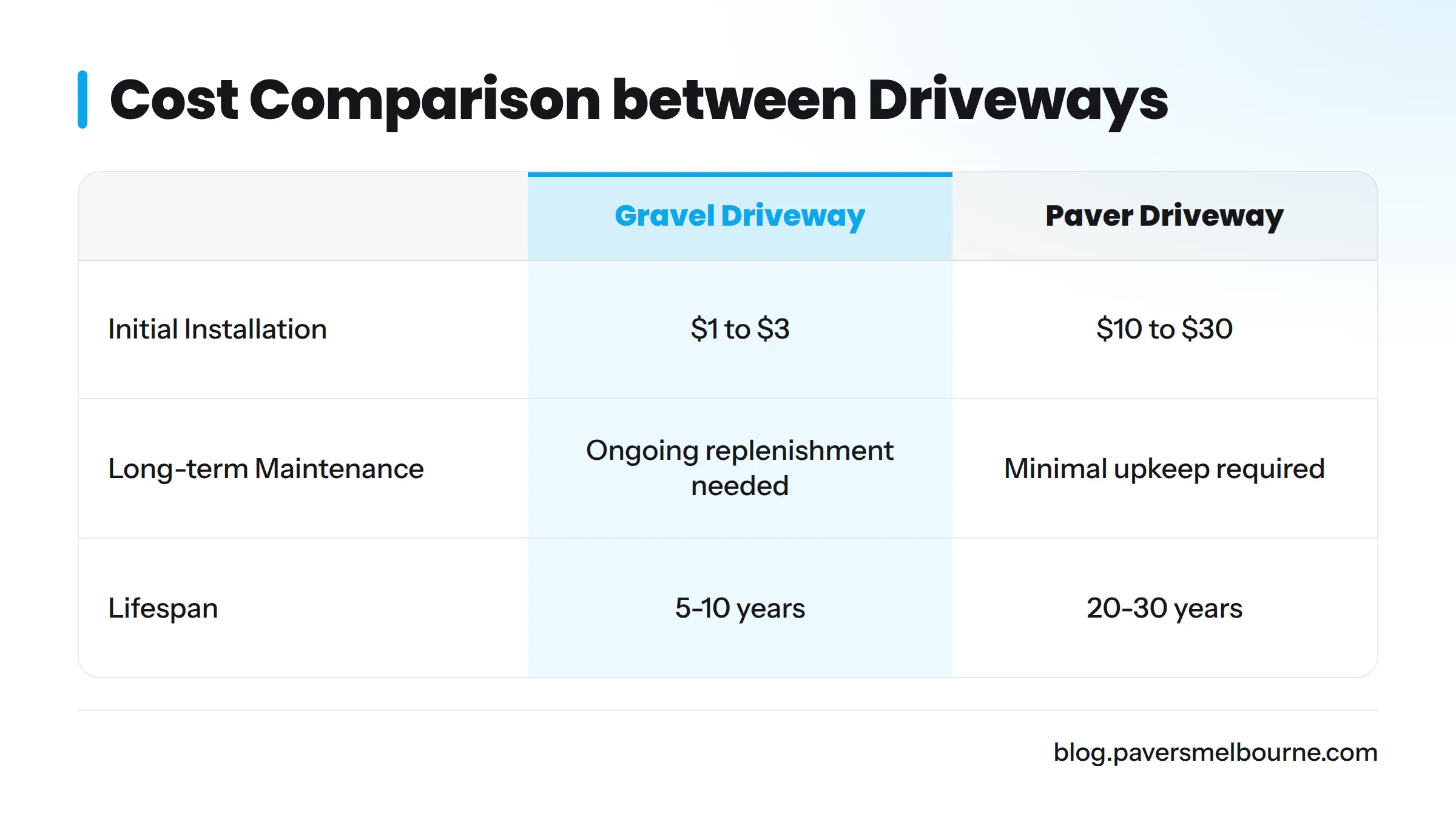
Understanding these costs can guide your decision-making process.
Maintenance Requirements for Gravel vs. Pavers
| Type | Maintenance Frequency | Key Tasks |
|---|---|---|
| Gravel Driveway | Every 6 months | Re-level, fill in washouts |
| Paver Driveway | Every 1-2 years | Cleaning, sealing |
Aesthetic Considerations for Driveways
A driveway’s appearance affects your property's overall value. Here’s how gravel and pavers stack up:
- Gravel: Provides a rustic, informal look that complements natural landscapes.
- Pavers: Offer a polished, versatile appearance that elevates property aesthetics.
Verdict: Which Is Better for Florida?
Your choice between a gravel driveway and pavers largely depends on your specific needs and priorities. If you seek lower upfront costs and a temporary solution, gravel may be appealing. Conversely, if durability and visual appeal are priorities, opting for pavers is a smarter long-term investment, especially in Florida's challenging climate.
Conclusion and Local Recommendations
Both gravel and paver driveways present unique benefits in Florida. Your decision should reflect your aesthetic preferences, budget considerations, and expected maintenance commitments. Consulting with local experts is advisable for a tailored solution suited to your property. For detailed insights on paver installations, check out our guide on Driveway Paver Installation and other resources to ensure you're making a well-informed choice.
Reader Questions
- What are the pros and cons of gravel driveways?
- How do paver driveways compare to gravel?
- What is the average cost of gravel driveways in Florida?
- How can I prevent washout in a gravel driveway?
- What maintenance does a gravel driveway require?
- Are paver driveways more durable than gravel?
- What are the aesthetic differences between gravel and pavers?
- How do local soil conditions affect driveway choice?
- How do I upgrade from gravel to pavers?
- What local weather impacts gravel driveways?
- What is involved in installing a paver driveway?
- Can gravel driveways withstand heavy rain?
- What materials are best for gravel driveways?
- Are paver driveways prone to weeds?
- How to enhance the look of a gravel driveway?
- How do you care for paver driveways?
- Which driveway option is cheaper in the long run?
- What is the lifespan of gravel driveways?
- Do pavers offer better property value?
- What are the signs of needing maintenance for a gravel driveway?
Sources
- Driveway Pavers in Melbourne, FL | Pavers Commandos
- How Much Do Driveway Pavers Cost in Brevard County
- Driveway Paver Costs in Brevard County
- Driveway Paver Options for Melbourne & Palm Bay FL
- Driveway Paver Options for Melbourne and Palm Bay Homeowners
- How to Repair Shifting Pavers on a Florida Sandy Subgrade
- How to Clean and Seal Pavers in Florida's Humid Climate
- Best Pavers for Pool Decks in Florida's Heat and Humidity
- Seal Pavers in Florida's Humidity: A Complete Guide
- Why Pavers Shift and Sink in Florida's Sandy Soil
- Stamped Concrete Patio vs Pavers in Florida
- Polymeric Sand for Pavers: What It Is and How to Use It
- Driveway Paver Installation Melbourne FL
Planning a Paver Project in Brevard County?
Our crew installs driveways, patios, and pool decks engineered for Florida's heat, rainfall, and sandy subgrade.
Get a Free Quote