
Stamped Concrete Patio vs Pavers in Florida
Explore the pros and cons of stamped concrete patios and pavers for your Florida home. Make an informed choice today!
Understanding Stamped Concrete Patios
A stamped concrete patio is a decorative outdoor surface made by applying textures or patterns to freshly poured concrete. This method can mimic the appearance of materials like brick, stone, or tile. In Florida, homeowners frequently opt for stamped concrete due to its aesthetic charm and versatility.
Appearance and Patterns
Stamped concrete offers a vast array of designs and colors. Homeowners can choose patterns that replicate natural stone or select vibrant tones to enhance their outdoor areas. This flexibility makes it a favored choice among Florida residents looking to beautify their patios.
Advantages of Stamped Concrete
- Aesthetic Variety: Stamped concrete provides a wide range of color and pattern choices, allowing for significant customization.
- Quick Installation: Compared to other options, stamped concrete can often be installed faster, leading to lower labor costs.
- Low Maintenance: A properly sealed stamped concrete patio resists stains and fading, requiring less upkeep than many other materials.
- Durability: When installed correctly, stamped concrete is sturdy, able to endure heavy foot traffic and Florida's severe weather conditions.
Disadvantages of Stamped Concrete in Florida
- Cracking Issues: Stamped concrete may crack, particularly due to Florida's shifting sandy subgrade. Homeowners should be aware of potential problems related to stamped concrete cracking and take preventive measures.
- Heat Retention: The surface can become quite hot under the sun, making it uncomfortable to walk on barefoot during peak heat.
- Sealing Requirements: Regular sealing is crucial to preserving appearance and preventing deterioration. A solid understanding of stamped concrete sealing is essential for ensuring longevity.
What is a Paver Patio?
A paver patio is formed using individual units made from concrete, brick, or stone. These units interlock, creating a flexible and durable surface suitable for various climates, including Florida's.
Types of Pavers
- Concrete Pavers: These are versatile and come in numerous styles and colors, making them popular.
- Clay Pavers: Crafted from baked clay, they are durable and retain their color over time.
- Natural Stone Pavers: Offering a unique and upscale look, these can be pricier and require more maintenance.
Advantages of Paver Patios
- Longevity: With proper installation, paver patios can last a lifetime without major issues, particularly in sandy soils.
- Easy Repairs: Should a paver become damaged, individual units can be easily replaced, unlike stamped concrete, which often needs resurfacing.
- Drainage: Pavers facilitate water drainage through the joints, alleviating puddling problems and improving moisture management in Florida's humid environment.
Disadvantages of Paver Patios
- Installation Complexity: Creating a paver patio typically requires intricate installation and proper base preparation, which can increase initial costs.
- Weed Growth: Weeds may sprout between pavers unless treated with polymeric sand or through regular maintenance.
- Maintenance Needs: To maintain appearance and stability, paver patios need routine cleaning and sealing.
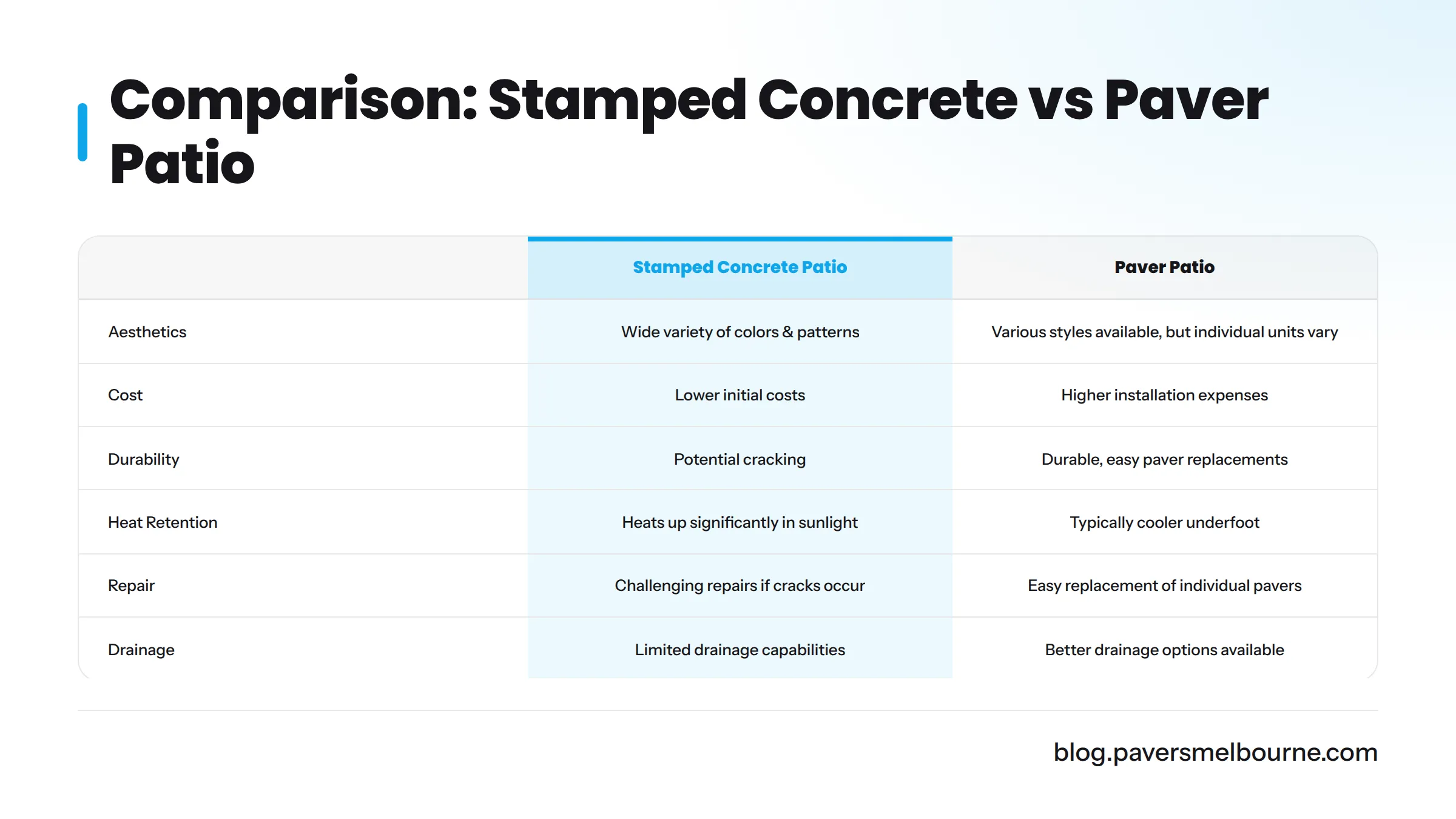
Comparison: Stamped Concrete Patio vs Paver Patio
| Feature | Stamped Concrete Patio | Paver Patio |
|---|---|---|
| Aesthetics | Offers a wide variety of colors & patterns | Various styles available, but individual units vary |
| Cost | Usually lower initial costs | Generally entails higher installation expenses |
| Durability | Potential cracking; requires maintenance | Durable but may need paver replacements |
| Heat Retention | Can heat up significantly in sunlight | Typically cooler underfoot |
| Repair | Repairs can be challenging if cracks occur | Easy replacement of individual pavers |
| Drainage | Limited drainage capabilities | Better drainage options available |
Conclusion: Making the Right Choice for Florida
Choosing between a stamped concrete patio and a paver patio hinges on your preferences and the specific conditions in your Florida location. If you value aesthetic appeal and quick installation, stamped concrete may be more beneficial. On the other hand, if longevity and ease of repair are critical, paver patios could be the preferable choice.
FAQ
- Is stamped concrete suitable for a patio? Yes, it provides a decorative option, but one should be cautious of potential cracking in sandy areas.
- What might a 10x20 stamped concrete patio cost? Prices vary widely, typically ranging in the thousands based on color and pattern choices.
- Can stamped concrete crack? Yes, especially if not installed correctly. Regular maintenance can help minimize this risk.
- How should I maintain a stamped concrete patio in Florida? Cleaning and regular sealing are crucial for maintaining its appearance and durability in humid conditions.
- What are the best paver options for humid environments? Concrete pavers or permeable pavers are often recommended for optimal moisture management.
For more detailed insights into paving options, explore our articles on patio paver installation and cost comparisons relevant to Florida's climate.
Video Resources
For additional understanding of the differences between these materials, check out:
Stamped Concrete Patio Vs. Paver Patio
Channel: DW Elite Decks, Duration: 1:21
Stamped Concrete VS Pavers | Pros and Cons
Channel: I Am a Hardscaper, Duration: 8:08
Sources
- Concrete Network
- Paver Guides & Advice - Pavers Commandos Melbourne
- Pavers for Patio in Melbourne, FL
- How to Clean and Seal Pavers in Florida's Humid Climate
Related: paver patios for Florida homes
Planning a Paver Project in Brevard County?
Our crew installs driveways, patios, and pool decks engineered for Florida's heat, rainfall, and sandy subgrade.
Get a Free Quote