
Paver Base: What It Is and How Deep It Should Be
Learn what a paver base is, its importance, and the ideal depth for installations in Florida. Ensure your project lasts with proper guidelines.
What is a Paver Base?
A paver base is the foundational layer that supports installations such as patios, walkways, and driveways. Typically made from compacted gravel or crushed stone, it provides stability and ensures proper drainage. This crucial layer prevents settling or shifting of pavers after installation, making it especially important in places like Florida, where sandy subgrades are common.
Importance of Paver Base
The paver base is vital for the longevity and functionality of any paved surface. Without a proper base:
- Pavers may shift, resulting in an uneven surface.
- Drainage issues can occur, leading to puddles.
- The lifespan of the pavers could significantly decrease.
Investing in a strong paver base not only enhances the aesthetic appeal but also boosts the durability of your hardscaping project. In Florida, where variable weather patterns affect soil stability, a well-constructed base is even more crucial.
Layers of a Paver Base
A quality paver base generally comprises multiple layers, each serving a specific purpose:
- Subgrade: The natural soil or existing surface where the base is laid. In sandy areas, this may require proper compaction.
- Geotextile Fabric: An optional layer that prevents weeds while allowing water to drain effectively, particularly useful in sandy conditions.
- Base Material: Crushed stone or gravel, ideally 3/4 inch in size, and compacted thoroughly. This layer typically ranges from 4 to 6 inches in thickness.
- Bedding Sand: A layer of coarse sand, about 1 inch thick, placed on top of the base material to create a smooth surface for laying pavers.
Understanding these layers is essential to ensure that your installation not only looks good but also performs well.
Recommended Depth for Paver Base in Florida
The recommended depth of a paver base varies based on the intended application:
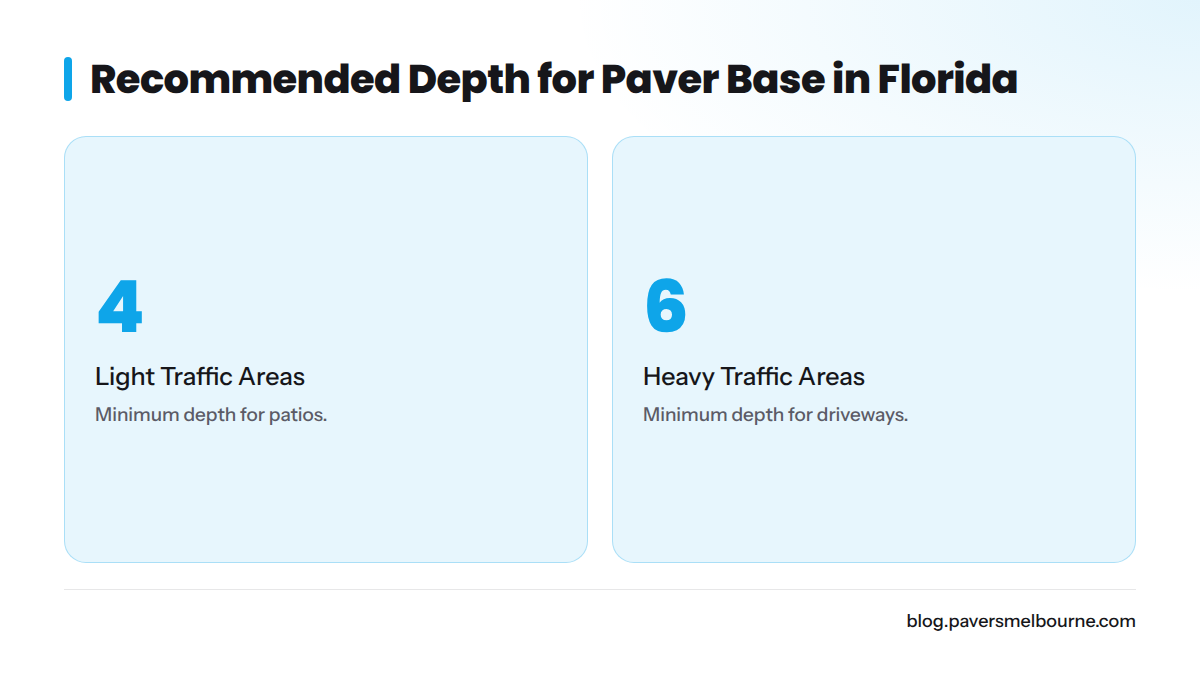
- Light Traffic Areas (e.g., patios): A minimum of 4 inches.
- Driveways or Heavier Traffic: At least 6 inches.
- Additional Considerations: If flooding or excessive rain is a concern, consider increasing the depth slightly to improve drainage.
For Construction:
- Measure and excavate down to at least 6 inches.
- Compact the subgrade thoroughly before laying the base material.
- Use layers of crushed stone that are 3-4 inches deep.
Impact of Florida Climate on Paver Base
Florida's climate presents unique challenges for constructing a paver base:
- High humidity and frequent rain can erode base layers if not secured properly.
- Sandy soils require careful compaction and the right materials to prevent shifting. Using geotextile fabric can help manage erosion from rain runoff.
- Regular maintenance, including frequent checks for settling or shifting, can prolong the life of your installation.
Common Causes of Base Failure
Identifying potential issues can help avert base failure:
- Improper Depth: Insufficient digging can lead to instability.
- Inadequate Compaction: Poor compaction of each layer may cause settling over time.
- Poor Drainage: Without proper drainage, water can pool and weaken the base, potentially leading to shifting or cracking.
Troubleshooting Tips:
- Regularly monitor the paved area for signs of settling.
- Implement installation practices that focus on effective drainage management.
Use Cases for Paver Bases in Florida
Paver bases can serve multiple purposes across various environments:
- Patios: Create outdoor relaxation areas with resilient and attractive surfaces.
- Driveways: Construct durable entrances that withstand vehicle traffic.
- Paths & Walkways: Ensure stable routes through landscaped or outdoor areas.
Investing in the right base significantly improves both the aesthetic appeal and functionality of your outdoor spaces.
Video Introduction
For visual learners, the video below covers essential paver base concepts:
How Deep to Dig for Pavers
Watch Here
FAQs
- What materials are best for a paver base?
- Crushed stone or gravel is recommended for stability and drainage.
- Can I lay pavers directly on the soil?
- No, a proper base is essential to prevent shifting.
- Does a paver base harden?
- Base materials compact to form a stable layer but do not harden like concrete.
- Is geotextile fabric necessary for paver bases?
- While optional, it can prevent weed growth and improve drainage.
- What depth adjustments are needed based on paver size?
- Generally, deeper bases are preferred for larger pavers or heavier loads on the surface.
For more detailed guides and tips, visit our site: Paver Guides & Advice - Pavers Commandos Melbourne
Sources
- Interlocking Concrete Pavement Institute (ICPI) Guidelines
- Paver Base Explained: Importance for Florida Installations
- Paver Base: What It Is and Why It Matters in Florida
- Considerations for Driveway Paver Costs in Brevard County
- Step-by-Step Patio Paver Installation Guide
- Top Pavers for Pool Decks in Florida's Heat
- Paver Installation: Step-by-Step Guide
- Repair Shifting Pavers in Florida's Sandy Soil
Planning a Paver Project in Brevard County?
Our crew installs driveways, patios, and pool decks engineered for Florida's heat, rainfall, and sandy subgrade.
Get a Free Quote